
GuideDayatas Profab · Insights
How is plastic scrap turned into resin pellets?
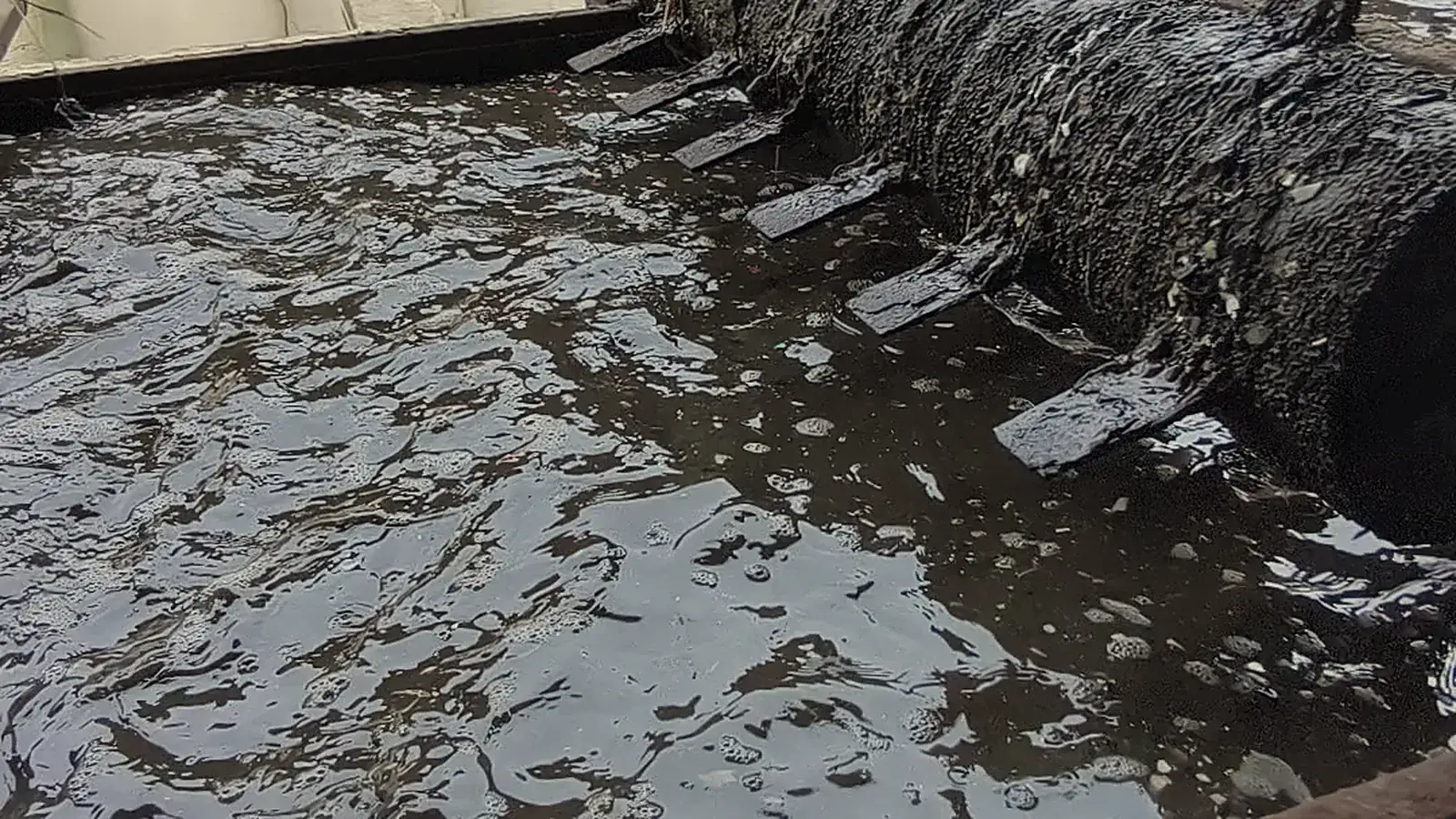
Plastic scrap is turned into resin pellets by mechanical recycling: the scrap is sorted by polymer, shredded and ground into flakes, washed, separated by density, dried and sorted again by charge or by sensor, then melted in an extruder that filters and degasses the melt before it is cut into pellets and tested. For ABS, PS and HIPS, each step decides how clean and consistent the pellets will be.
On this page13
✓Key takeaways
- What the steps achieved shows in the lot's melt flow, density and mechanical figures, which is why buyers ask for them; what each document should show is on quality and documents.
- Float-sink tanks at 1.0, 1.1 and 1.25 g/cm³ split appliance flake: polyethylene and polypropylene float first, ABS and PS without halogens sit between 1.0 and 1.1, and most brominated flame retardants end up above 1.1 (source 3).
- ABS and HIPS have similar densities, so density cannot part them; electrostatic separation may refine that mixture (source 3).
- Clean input beats a fine filter. In a 2024 study, “even low amounts of contaminations lowered the key properties” of ABS, and filtering ABS recyclate through screens of different mesh sizes brought little mechanical improvement (source 6).
What are the steps from plastic scrap to resin pellets?
Mechanical recycling turns plastic scrap into resin pellets in nine broad steps, from sorting the scrap by polymer to testing the finished lot. TWI lists collection, sorting, washing, drying, grinding, compounding and pelletising, and notes that the steps may follow a different order or occur more than once, depending on the waste (source 1).
- Sort by polymer Collected equipment is sorted into categories.
- Shred and grind Parts are cut into flakes; magnets and eddy-current separators take out the metals.
- Wash Dirt and residues come off the flake.
- Sort by density Float-sink tanks split the flake by density, which also takes out most flame-retarded plastic.
- Dry The water from washing and the tanks comes off before the next sort and the melt.
- Sort by charge or sensor Electrostatic, near-infrared or X-ray sorting separates what density cannot.
- Extrude The flake is melted, filtered, homogenised and degassed.
- Pelletise The melt is cut into pellets, and fines and oversize are screened out.
- Test the lot Melt flow, density and mechanical properties are measured, and the lot is screened for bromine.
This guide follows ABS, PS and HIPS, the engineering plastics that arrive as appliance housings and car parts, where density sorting and flame retardants decide what the pellet can be. Dayatas Profab's own production footage shows several of these stages, from the washing tank to strands leaving an extruder: see it, shot by shot, on how Dayatas Profab's resin is made.
| Step | What it changes in the pellet | What to check on the lot |
|---|---|---|
| Sorting by polymer | Which plastic the pellet is, and how many other plastics or grades travel with it | Melt flow from lot to lot |
| Shredding and grinding | Metal, glass, wood and rubber still in the flake, left for later steps | Mechanical properties |
| Washing | Dirt and residues that would stay in the pellet | Mechanical properties |
| Density sorting | Polyolefins and heavy, flame-retarded plastics taken out | Density; bromine screen |
| Drying | Water taken off, so the flake can be charged and melted | Ask how the flake is dried |
| Sorting by charge or sensor | ABS kept apart from PS and HIPS; black parts may go unidentified | Ask how ABS was kept apart from HIPS |
| Extrusion | Solids filtered out, melt evened out, volatiles drawn off; one more heat history | Melt flow |
| Pelletising | Pellet shape and size; fines and oversize screened out | Pellet size and shape in the bag |
Sources for the table: sources 1, 2, 3, 4, 5, 6, 8, 11.
Why does sorting by polymer decide what the pellet can be?
Recycling works one polymer at a time, so a recycled pellet can only be as uniform as the sort that fed it. TWI notes that mixed and contaminated waste streams make sorting and recycling difficult, and that even different grades of the same polymer add to the contamination of the recovered material (source 1). Appliance scrap is the hard case: plastics from electrical equipment may include more than 15 polymer types (source 3).
The polymers most used in electrical and electronic equipment are PS, ABS, polycarbonate (PC), polyamide (PA) and polypropylene (PP) (source 2). An earlier study cited by Fraunhofer IVV researchers found ABS, PS and PP made up 29%, 26% and 22% of a 10-tonne batch of small appliances (source 3). Collected equipment is therefore first sorted into categories, which makes each type of plastic easier to recycle (source 2). The scrap Dayatas Profab looks for includes plastic from scrapped home appliances and automotive plastic scrap.
What do shredding and grinding change?
Shredding and grinding cut housings and car parts into flakes small enough to wash, sort and feed to an extruder. In appliance recycling, the plastic is shredded, magnetic sorting and eddy-current separation remove the metals, and the plastic is then ground into smaller pieces to make the rest of the process more efficient (source 2). Ground plastic is called flake or regrind.
Shredded appliance plastic is still a mixture, with a small fraction of impurities such as glass, wood, rubber and metals (source 2). Whatever solid gets past the later steps is left for the melt filter in the extruder to catch (source 8). Flake size has to suit the sorting that follows: electrostatic separation of ABS and PS needs a mixture ground below 10 mm and free of dust (source 4).
What does washing remove, and what stays in the pellet if it does not?
Washing takes dirt and residues off the flake before it is sorted and melted, and whatever washing misses goes on into the pellet. Recycled polymers can retain low concentrations of particulate contaminants after sorting, washing and size reduction (source 7). A 2024 study of ABS found that “even low amounts of contaminations lowered the key properties” (source 6).
Barbara Liedl and Christoph Burgstaller tested ABS containing 0.5 to 2.0 wt.% of wood and rubber particles (source 6), two of the impurities found in shredded appliance plastic (source 2). The picture at the top of this page is a frame of Dayatas Profab's own footage: flakes churned through the water of a washing tank.
How does a float-sink tank sort ABS, PS and HIPS from other plastics?
A float-sink tank sorts flake by density: in a liquid of chosen density, lighter plastics float and heavier ones sink. In Fraunhofer IVV's work on appliance plastics, with cuts at 1.0, 1.1 and 1.25 g/cm³, polyethylene and polypropylene float below 1.0, ABS and PS without halogens fall between 1.0 and 1.1, and halogenated ABS and PS sink between 1.1 and 1.25 (source 3).
| Fraction | Density | Main polymers in it |
|---|---|---|
| 1 | Below 1.0 g/cm³ | Polyethylene (PE), polypropylene (PP) |
| 2 | 1.0 to 1.1 g/cm³ | ABS and PS without halogens |
| 3 | 1.1 to 1.25 g/cm³ | ABS and PS with halogens, such as brominated flame retardants; PC; PMMA |
| 4 | Above 1.25 g/cm³ | POM, PA and other heavy plastics |
The cut at about 1.1 g/cm³ works because brominated flame retardants are usually added in concentrations that raise a plastic's density substantially (source 3). In the study's laboratory separations, recycling only the two lighter fractions removed more than 94% of the bromine. The authors note that their lab batches may overestimate the bromine left in the light fractions compared with industrial plants, where an industry standard asks for at most 2000 ppm bromine in the fractions below 1.1 g/cm³ (source 3).
“The density-based separation route is well established in European WEEE plastics treatment, producing ABS, PS, and PP free of elevated BFR levels.”
Laura Strobl and colleagues, Fraunhofer IVV, in Recycling (2021) (source 3)
Density sorting decides how much flame retardant from old equipment reaches an ABS or PS pellet. For a scrap holder, the heavy side matters too: Fraunhofer IVV reports that the fraction above 1.1 g/cm³ is currently not used further (source 3). Why bromine matters for an electronics housing, and how it is tested, is on is recycled ABS good enough for monitor housings.
Why is the flake dried before the last sort and the melt?
Washing and float-sink tanks leave the flake wet, and the steps after them need it dry. Electrostatic separation depends on it: Hamos, a maker of electrostatic separators, names moisture as the most important criterion, because “only dry ground material can be sufficiently electrostatically charged” (source 4). TWI places drying straight after washing in its list of recycling steps (source 1).
Moisture also matters at the melt. ABS is hygroscopic (source 17), and Starlinger offers a degassing module for hygroscopic input (source 8). Drying the finished pellets again at the press is the moulder's step, covered in ABS, PS or HIPS: which resin for an injection-moulded part.
How are ABS and HIPS separated when density cannot do it?
ABS and HIPS (high-impact polystyrene) have similar densities, so a float-sink tank leaves them in the same fraction; Fraunhofer IVV researchers note that electrostatic separation may help to refine that mixture (source 3). Hamos describes the method for ABS and polystyrene: charged together, ABS becomes positive and PS negative, and the separator takes ABS out in a first stage and PS in a second (source 4).
Froth flotation is another route that has been studied. Plastics are naturally hydrophobic, so one type can be floated off by making another's surface selectively wettable; a 2013 study at Lisbon's Instituto Superior Técnico recovered 67% of the ABS from an ABS and PS mixture, contaminated by some PS (source 18). How ABS, PS and HIPS then differ in a moulded part is on ABS vs PS vs HIPS.
How do sensors sort plastic, and why does black plastic slip through?
Near-infrared (NIR) sorters identify each flake or part by the spectrum it reflects. Black plastic defeats them: carbon black, the usual black pigment, absorbs the NIR beam and stops the polymer's characteristic spectrum from reaching the sensor, so the technique fails to see black materials and some colours (source 5). Black parts therefore have to be sorted by other means, such as density or charge.
X-ray methods look for bromine rather than the polymer. Checking parts by hand-held X-ray fluorescence (XRF) is too slow for large volumes, and automated X-ray transmission (XRT) sorting has not yet been widely implemented (source 3). Dayatas Profab's footage shows a sorting machine at work; how ABS is kept apart from other plastics and colours is a fair question to ask us, or any recycler.
What does the extruder do besides melting the flake?
A recycling extruder melts the flake, filters solid contaminants out of the melt, evens the melt out and draws off gases before the melt leaves the die. On Starlinger's recycling line, a melt filter continuously removes solid contaminants and an optional degassing extruder removes volatile contaminants and monomers (source 8); Erema's TVEplus places melt filtration upstream of degassing (source 9).
- Melt filtration. Liedl and Burgstaller found that filtering post-consumer ABS recyclate through screens of different mesh sizes brought little improvement in mechanical properties, at the cost of longer idle times and lost material, and that finer filtration damaged the material (source 6). Plastics Engineering's 2026 write-up of that study gives the screens as 250, 100, 60 and 20 µm, and notes that smaller openings retain more contaminants but can compromise process stability (source 7). A finer screen is not automatically a better pellet; cleaner flake is.
- Degassing. Volatile contaminants and monomers are drawn off the melt (source 8). In Erema's words, “only thoroughly melted, filtered and homogenised material can pass the degassing zone of the extruder” (source 9).
Every pass through an extruder also adds one more heat history: TWI notes that polymer degradation occurs during the recycling processes (source 1). What that does to recycled ABS, and how buyers offset it, is on recycled vs virgin resin.
How is the melt cut into pellets, and why does the cut matter?
A pelletiser cuts the melt into pellets and sets their shape and size. On Starlinger's recycling lines the pelletiser, strand, water-ring or underwater, is chosen by polymer type and the pellet shape wanted (source 8). Strand pelletising gives cylindrical pellets; in underwater pelletising the melt is cut by a rotating cutter and quenched by flowing water, and each piece solidifies as a sphere (source 10).
After cutting, pellet classifiers separate fines, oversize, and short, long and other off-spec pieces from the pellets that meet the size specification (source 11).
Pelletising is the last step that changes the pellet's shape before bagging. Dayatas Profab's own footage shows the strand route, molten strands running into cooling water and pellets falling from the cutter, and its ABS is bagged in 25 kg bags printed “ABS RECYCLED PELLET / MADE IN MALAYSIA”.
How is a recycled pellet tested, and what does each test show?
A recycled pellet is tested lot by lot, because the tests show what the steps before achieved. The core figures are melt flow to ISO 1133-1, density to ISO 1183-1 and Izod impact strength to ISO 180 (sources 12, 13, 14). For polystyrene recyclates, EN 15342 sets out the main characteristics and test methods that buyers and sellers can agree specifications on (source 15).
- Melt flow reflects the sort and the heat history: a lot that flows differently from the last one is worth a question.
- Density shows whether the pellet sits where its polymer should; since flame retardants raise density, a high reading in a grade sold without them is worth a question (sources 13, 3).
- Mechanical properties, such as Izod impact strength, show what contamination left behind (see washing, above) (source 6).
- A bromine screen checks what density sorting achieved (source 3).
- Traceability to EN 15343 records where the scrap came from and is the basis for calculating recycled content (source 16).
The full checklist for a recycled datasheet is on what a recycled resin datasheet should show. Dayatas Profab's production film is ready; our spec sheets and test reports are to come, and certification and licences are to come.
Common questions about turning plastic scrap into pellets
Can ABS and HIPS be separated in recycling?
Not by density: ABS and HIPS have similar densities, so a float-sink tank leaves them together. Electrostatic separation may refine the mixture: ABS and polystyrene take opposite charges, provided the flake is dry, dust-free and ground below 10 mm. Ask the recycler how the ABS in a lot was kept apart from HIPS. (sources 3, 4)
Why are black plastics hard to sort for recycling?
Near-infrared sorters identify a plastic by the spectrum it reflects. Carbon black, the usual black pigment, absorbs the near-infrared beam, so the sorter cannot read the polymer's spectrum and black parts go unidentified. Black plastic needs another method, such as density or electrostatic separation. (source 5)
What happens to plastics with brominated flame retardants?
In European appliance recycling, the established route sorts them by density: brominated flame retardants raise a plastic's density, so it sinks in a liquid of about 1.1 g/cm³ while ABS and PS without them float. Fraunhofer IVV reports that the heavy fraction is currently not used further, and that an industry standard asks for at most 2000 ppm bromine in the light fractions. (source 3)
Does finer melt filtration make up for contaminated ABS recyclate?
No. In a 2024 study, filtering post-consumer ABS recyclate through screens of different mesh sizes gave little improvement in mechanical properties, at the cost of idle time and material, and finer filtration damaged the material. Clean, well-sorted flake does more for the pellet than a finer screen. (source 6)
Does Dayatas Profab make its resin pellets this way?
Dayatas Profab's ABS is recycled pellet, made in Malaysia and packed in 25 kg bags. Our own production footage shows scrap washed and sorted, molten strands leaving an extruder into cooling water, and pellets on a sieve. We have not published our process settings; ask us for what your quality team needs. Use the buyer enquiry form.
How do you buy recycled pellets from Dayatas Profab, or sell us scrap?
Dayatas Profab sells ABS, PS and HIPS resin to injection moulders worldwide, and looks for suppliers of plastic scrap. Our ABS is recycled pellet made in Malaysia, packed in 25 kg bags. Which documents are ready for each resin, and which are still to come, is set out on quality and documents.
If you hold ABS, PS or HIPS scrap from appliances, cars or crushed product, see sell your plastic scrap. To ask for resin, tell us the resin, the part, the quantity and the destination port through our buyer enquiry form.
Sources
- TWI: What is mechanical recycling?: the steps (collection, sorting, washing, drying, grinding, compounding and pelletising), their order, mixed and contaminated streams, grades of the same polymer, degradation during recycling
- Plastics Recyclers Europe: How does recycling work? WEEE plastics (factsheet, 2023): collection, the polymers most used in electrical equipment, sorting by category, shredding with magnetic and eddy-current separation, grinding, sink-float tanks and extrusion into pellets
- Laura Strobl, Thomas Diefenhardt, Martin Schlummer, Tanja Leege and Swetlana Wagner (Fraunhofer IVV): Recycling potential for non-valorized plastic fractions from electrical and electronic waste, Recycling 6 (2021) 33: density fractions of appliance plastics, brominated flame retardants and the 1.1 g/cm³ cut, the industry bromine standard, ABS and HIPS densities, electrostatic refining, XRF and XRT
- Hamos via RecyclingInside: Separation solution already in industrial use for decades (2022): electrostatic separation of ABS and PS: charging, two stages, particle size, dust and moisture
- European Commission CORDIS: NIRSort, NIR-transparent polymer colourants to replace carbon black (project 760642): why near-infrared sorting fails on black plastics
- Barbara Liedl and Christoph Burgstaller: Influence of selected contaminations and melt filtration on the properties of ABS and ABS recyclate, Polymer Engineering and Science 64 (2024) 3025: wood and rubber contamination in ABS; melt filtration of post-consumer ABS recyclate
- Plastics Engineering (SPE): Melt filtration becomes critical for recycled ABS quality (3 August 2026): a write-up of the Liedl and Burgstaller study: screen mesh sizes and the trade-off of fine filtration; contaminants left after sorting, washing and size reduction
- Starlinger: recoSTAR dynamic recycling line: melt filter, degassing modules, homogenising feeder and pelletiser types
- Erema: INTAREMA TVEplus: filtration upstream of degassing, homogenisation of the melt
- Frank Asmuss (BKG, Nordson): Portfolio of pelletizers, Extrusion 4/2017: cylindrical strand pellets and spherical underwater pellets
- Powder & Bulk Solids: Witte reveals advances in pellet separation science (2012): pellet classifiers: fines, oversize and off-spec material
- ISO 1133-1:2022, melt mass-flow rate (MFR) and melt volume-flow rate (MVR): melt flow
- ISO 1183-1:2025, density of non-cellular plastics: density, including flakes and granules
- ISO 180:2023, Izod impact strength of plastics: impact strength
- EN 15342:2025, characterization of polystyrene (PS) recyclates (Estonian Centre for Standardisation): main characteristics and test methods for PS recyclates
- EN 15343, plastics recycling traceability and assessment of conformity and recycled content (Swedish Institute for Standards): traceability and recycled content
- Autodesk Moldflow: ABS materials: ABS is hygroscopic
- Mara Dias: Separation of WEEE plastics resorting gravity separation and froth flotation, MSc thesis, Instituto Superior Técnico, Lisbon (2013): froth flotation of ABS and PS by selective wettability
Two doors into Dayatas Profab A · buyers of resin B · suppliers of scrap