
FILMProcess · Own footage
How Dayatas Profab's recycled ABS pellet is made: from scrap to pellet.
- 13 shots
- 31 seconds, no sound
- 5 stations
- ABS in 25 kg bags
- Made in Malaysia
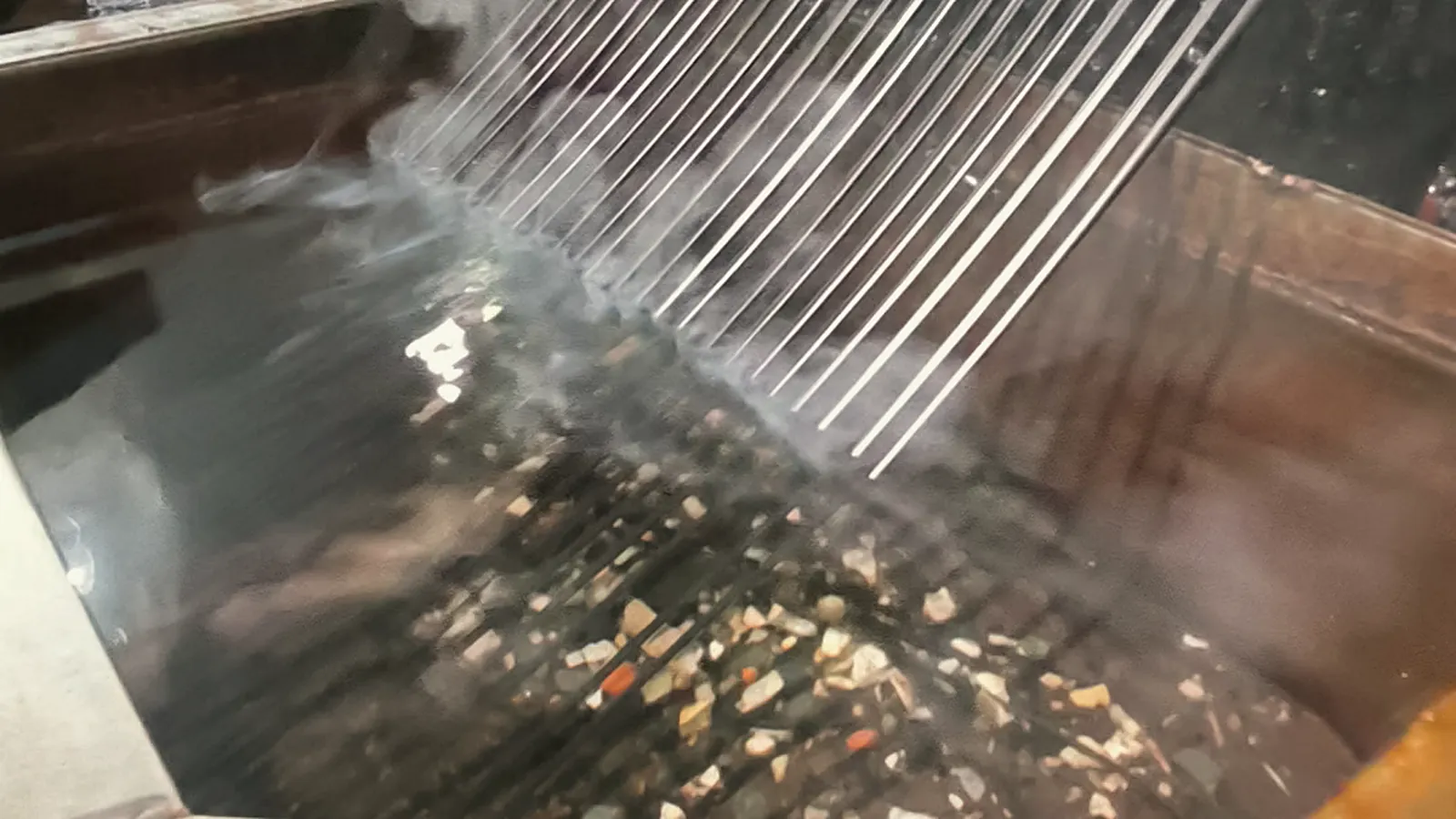 TC 00:00:00:00
Recycled ABS pellet is made by crushing plastic scrap into flakes, washing and sorting the flakes, then melting and extruding them into strands that are cut into pellets. Dayatas Profab's production film follows these steps in 13 shots over 31 seconds, ending in 25 kg bags printed ABS RECYCLED PELLET, MADE IN MALAYSIA.
On this page7
SC.0013 shotsTC 00:00:00:00 to 00:00:30:24
What does Dayatas Profab's production film show, shot by shot?
Dayatas Profab's production film follows plastic from scrap to pellet in 13 shots over 31 seconds, from scrap heaped in the yard to bagged resin in the warehouse. Buyers in Europe and America ask a lot for video of the production, alongside resin specs, certification and test reports; this is that video.
The bags at the end settle what is exact: Dayatas Profab's recycled ABS resin is pellet, made in Malaysia and packed in 25 kg bags. The film ends on those bags, but it does not establish that every machine before them is Dayatas Profab's own, so each station below says only what the film shows. For PS and HIPS, Dayatas Profab is still confirming whether the resin is recycled, its form and its packing (see PS resin and HIPS resin).
- Filmed
- 19 October 2026
- Film cut
- 20 October 2026: 13 shots, 31 seconds, no sound
- Bag print
- ABS RECYCLED PELLET / MADE IN MALAYSIA / NET WEIGHT 25KG
- Page reviewed
- 25 October 2026
SC.01Shots 01-03TC 00:00:00:00 to 00:00:07:12
What does Dayatas Profab's recycled ABS start as, and how is it crushed?
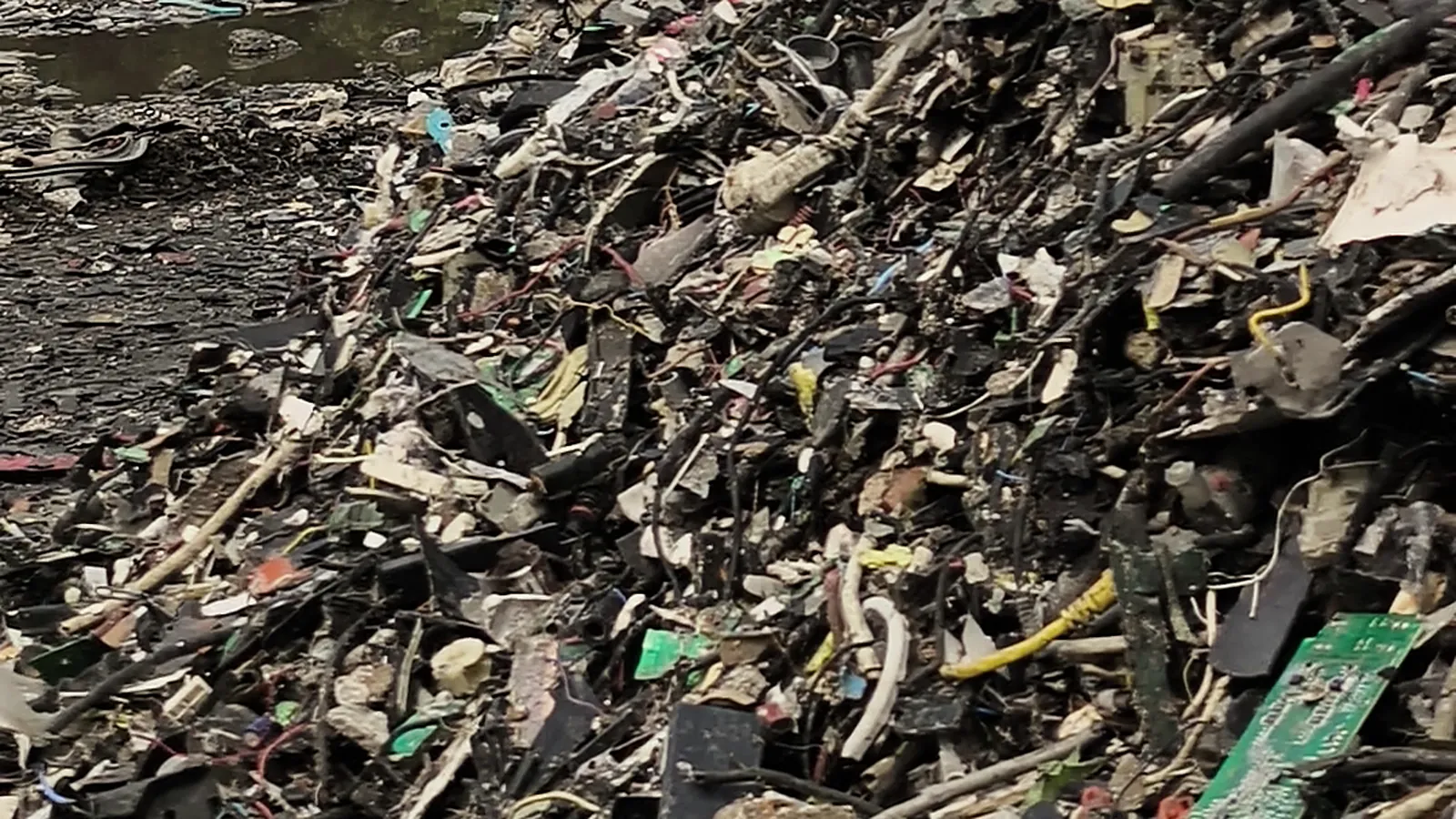 Yard
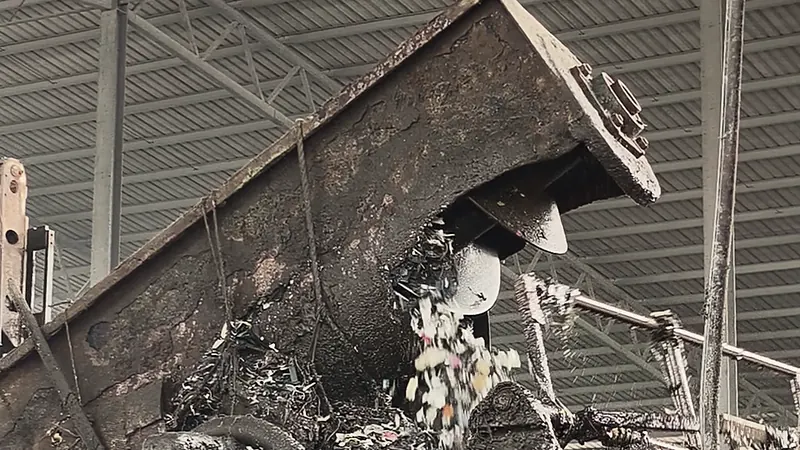
On film
Shots 01-03: plastic scrap heaped in the yard; a loader tipping crushed flakes onto the stockpile; a hand lifting mixed flakes from the feed.
Dayatas Profab's recycled ABS starts as plastic scrap. The film opens on scrap heaped in the yard, then a loader tipping crushed flakes onto the stockpile and a hand lifting mixed flakes from the feed. A raw clip, not in the film, shows crushed scrap pouring from a chute into a bin.
Grinding scrap into flake is one of the usual steps of mechanical recycling, with collection, sorting, washing and drying; the order depends on the waste, and steps can repeat [2]. Ground scrap is also called regrind.
Dayatas Profab is looking for suppliers of plastic scrap: plastic from scrapped home appliances, automotive plastic and crushed product. ABS and polystyrene can come back as resin because they are thermoplastics: they melt when heated and harden again as they cool [1]. Suppliers can start from selling Dayatas Profab your plastic scrap.
SC.02Shot 04TC 00:00:07:12 to 00:00:09:24
Why is the flake washed before it is sorted?
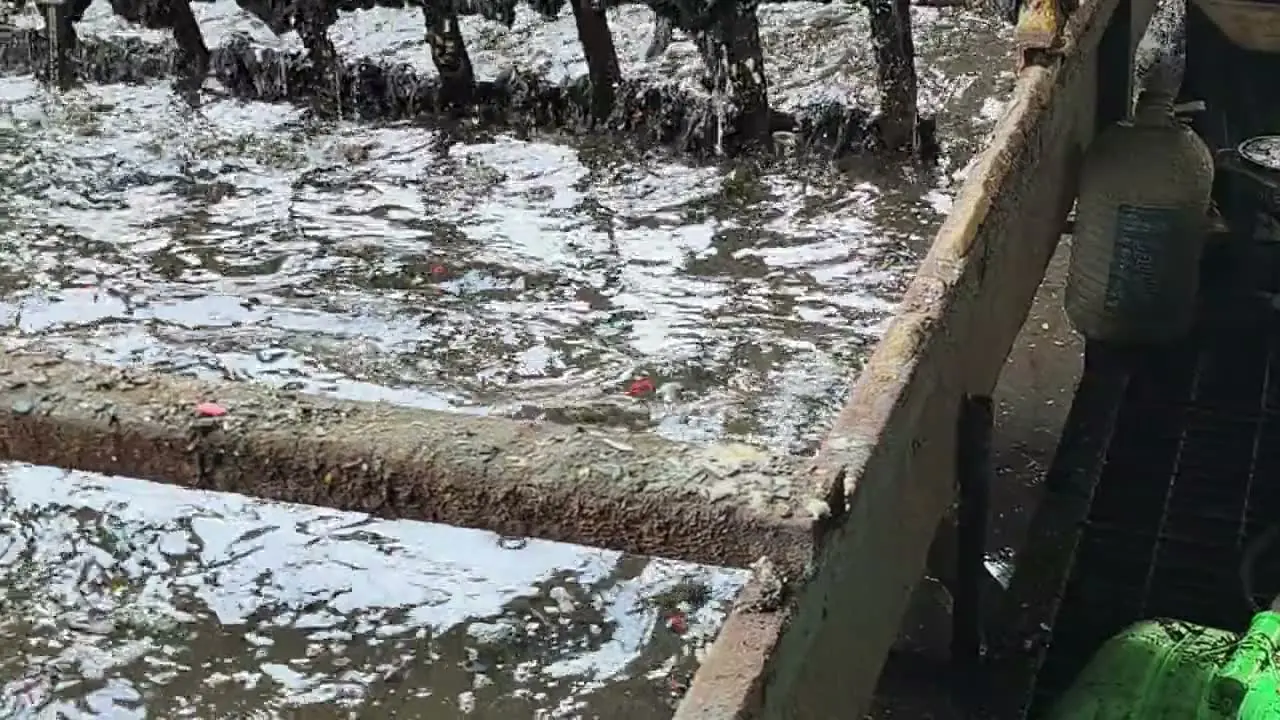 Washing
On film
Shot 04: flakes churned through the tanks of the washing line.
The washing line in the film is its second station: flakes churned through tanks of water. Washing is one of the usual steps of mechanical recycling, and drying follows it [2].
For a moulder, much of a recycled resin's consistency is decided here. The quality of recycled material depends on the quality of the plastic waste stream that goes in [2]: dirt or residue left on the flake does not vanish in the extruder, it ends up in the pellet and later in the part. That is why buyers of recycled resin ask to see the process, and ask for a test report on each lot.
SC.03Shots 05-07TC 00:00:09:24 to 00:00:16:24
How is the flake sorted before extrusion?
 Sorting
On film
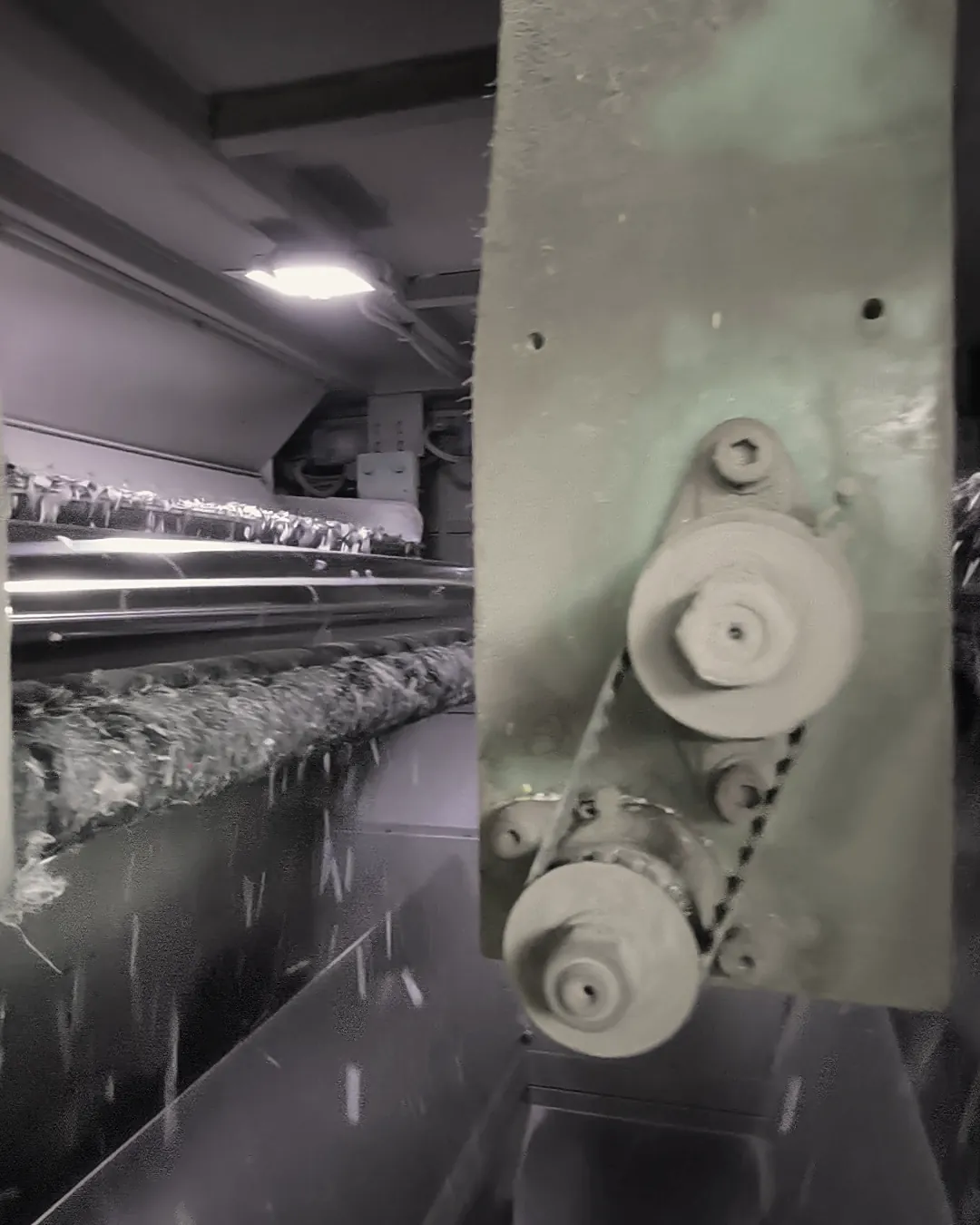
Shots 05-07: crushed flakes pouring out of a chute; flakes flying off the rollers inside a sorting machine; sorted flakes running from pipes into bulk bags.
Dayatas Profab's film gives sorting three shots: crushed flakes pour out of a chute, flakes fly off the rollers inside the sorting machine in the film, and sorted flakes run from pipes into bulk bags.
Sorting is one of the usual steps of mechanical recycling [2], and it matters because recycling works polymer by polymer. A flake of another plastic travelling with the ABS, or a dark flake in a light batch, shows up later as resin that behaves or looks different from the last lot. ABS, PS and HIPS are different resins; how they compare in a moulded part is on ABS vs PS vs HIPS.
What sorting achieved reaches a buyer in the datasheet and the test report for the lot, not in the footage.
SC.04Shots 08-09TC 00:00:16:24 to 00:00:21:06
How does washed, sorted flake become a pellet?
 Cutter
On film
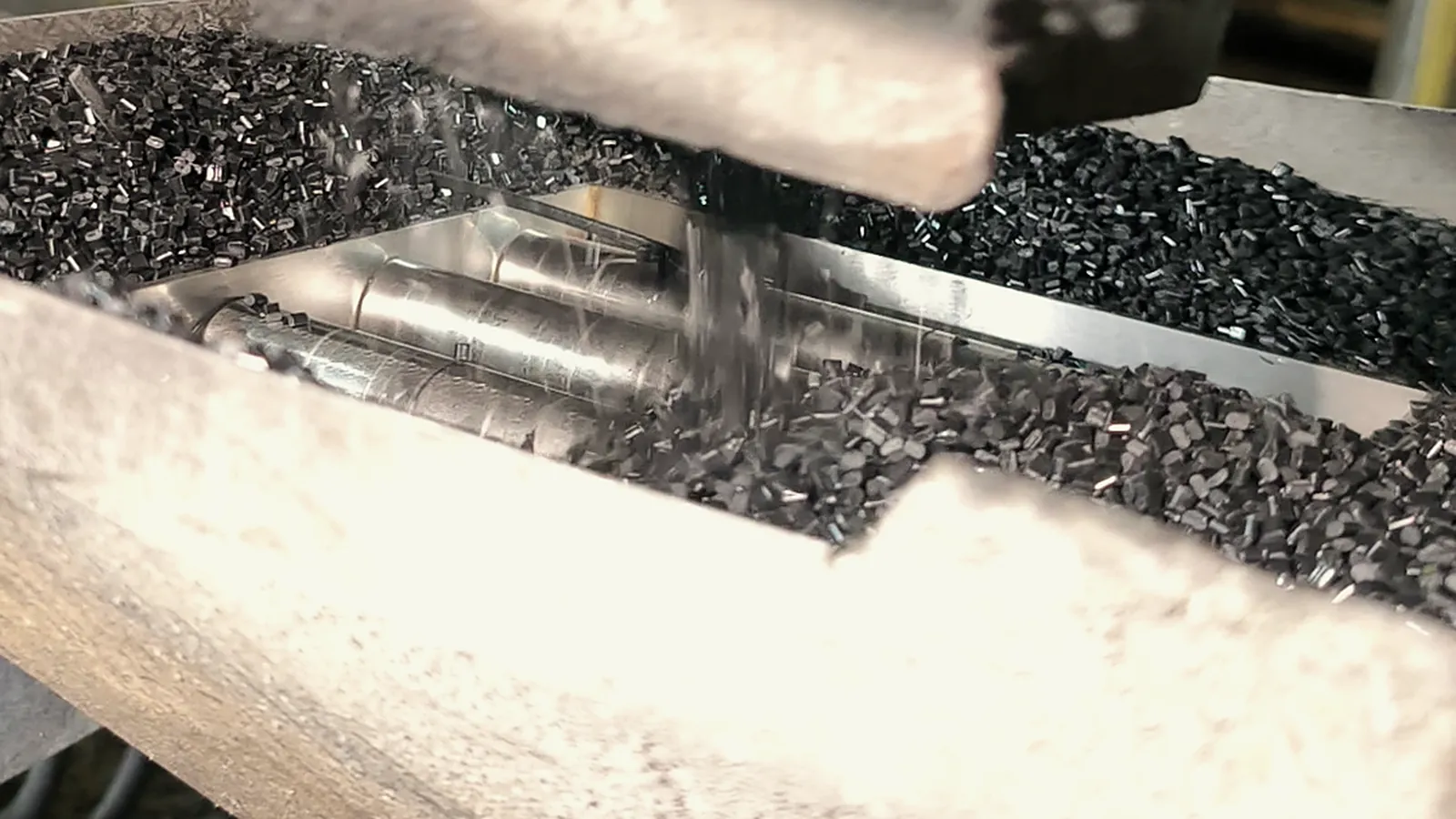
Shots 08-09: molten strands leaving an extruder into cooling water; fresh pellets moving over a vibrating sieve.
Not shown in the film: what a typical recycling line adds
In the film, flake goes back to resin by extrusion: molten strands leave the extruder and run into cooling water, where they set.
Dayatas Profab's raw footage also shows pellets falling from the cutter (not in the 31-second film); the film picks them up on the vibrating sieve.
ABS and polystyrene harden again as they cool [1], which is what lets a scrapped housing come back as a pellet a moulder can feed into a machine. On a typical recycling line the flake is dried, and the melt is filtered and degassed before it is pelletised [2, 3]; the film does not show whether the line in it does, so the list beside this describes a typical line, not this one. How a recycled pellet behaves next to new material is on recycled vs virgin resin.
SC.05Shots 10-13TC 00:00:21:06 to 00:00:30:24
How is Dayatas Profab's ABS pellet bagged and stocked?
 Bagging
The bag print, as filmed · Shot 11
ABS RECYCLED PELLETMADE IN MALAYSIANET WEIGHT 25KG
On film
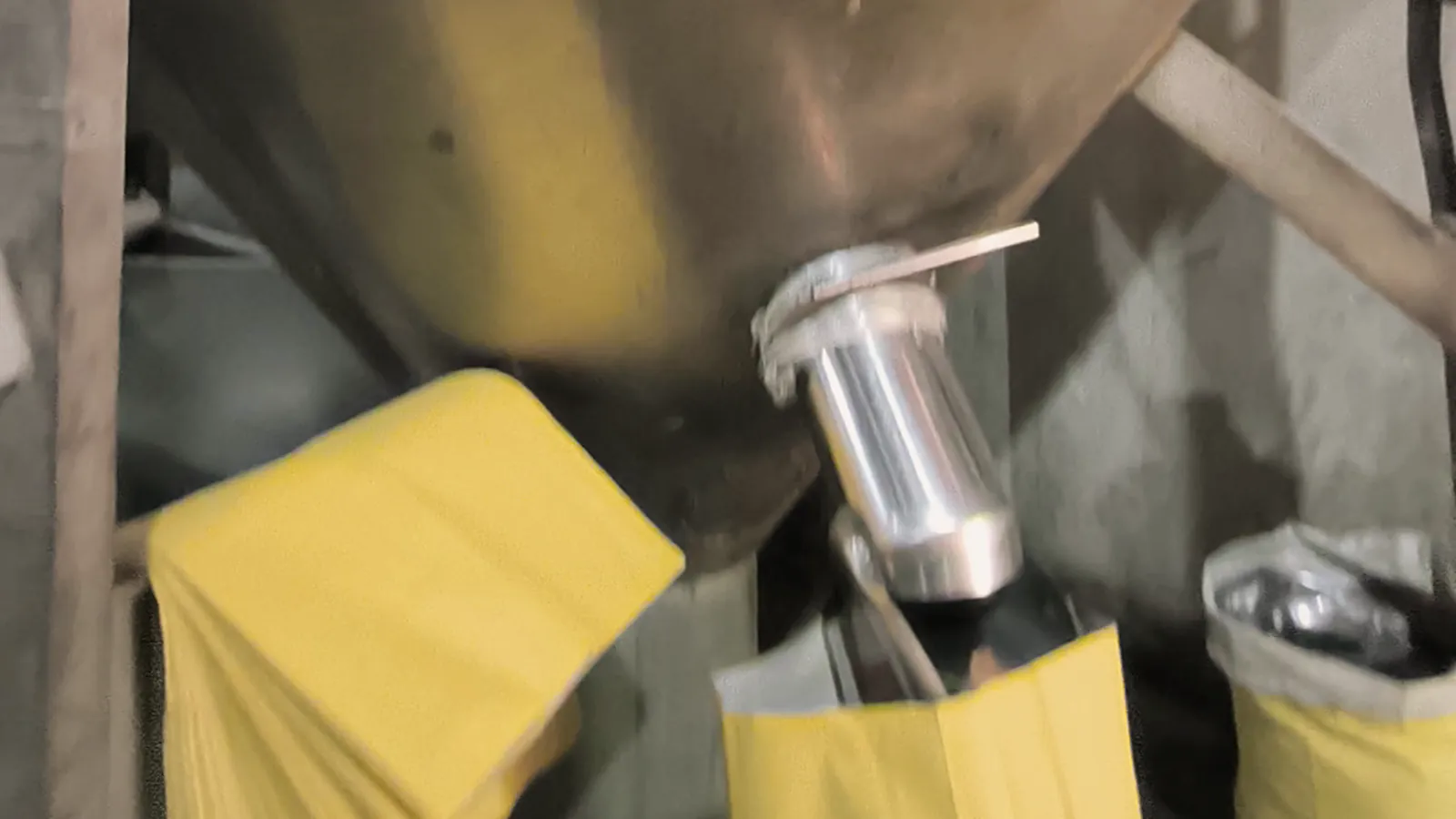
Shots 10-13: pellets running from a silo into a bag; bags printed "ABS RECYCLED PELLET / MADE IN MALAYSIA / NET WEIGHT 25KG"; bagged resin stocked in the warehouse; an aisle of filled bulk bags.
The last shots follow the pellets out. Pellets run from a silo into a bag, the finished bags are printed "ABS RECYCLED PELLET / MADE IN MALAYSIA / NET WEIGHT 25KG", bagged resin stands stocked in the warehouse, and an aisle of filled bulk bags closes the film.
The bag print settles three facts: Dayatas Profab's recycled ABS is sold as pellet, made in Malaysia and packed in 25 kg bags.
For a buyer, this is where the film hands over to documents: the bag says what the resin is, and the datasheet and test report say how it behaves. The three resins and how to order are on ABS, PS and HIPS resin for injection moulding; common questions are answered in the FAQ.
SC.06After the film
What should a buyer ask Dayatas Profab about each station?
The film shows each station of the line it follows; the numbers a quality team needs come in documents. The table pairs what the footage shows with the question to send.
| Station | What the footage shows | What to ask Dayatas Profab for |
|---|---|---|
| Scrap and crushing | Scrap heaped in the yard; a loader tipping crushed flakes; mixed flakes in a hand | Which plastics the scrap holds, and where it comes from |
| Washing | Flakes churned through the tanks of the washing line | How the flake is washed and dried |
| Sorting | Flakes from a chute; the sorting machine; sorted flakes into bulk bags | How ABS is kept apart from other plastics and colours |
| Extrusion and pellets | Strands into cooling water; pellets on a vibrating sieve | Whether the line filters and degasses the melt; the datasheet values for the lot, such as melt flow index |
| Bagging and stock | Pellets from a silo into 25 kg bags printed ABS RECYCLED PELLET; warehouse stock | How each lot is labelled, and the packing for your order |
Dayatas Profab has not published its plant address, capacity, output or process settings, and the footage does not establish that every machine in it is Dayatas Profab's own. Its resin spec sheets, test reports, certification and licensing are To come; quality and documents shows where each one stands. Until then, ask for what your quality team needs and Dayatas Profab will tell you what it has. Guides on buying recycled resin and selling scrap are on Insights.
REFChecked 25 October 2026
Sources for the general lines
- PlasticsEurope: ThermoplasticsABS and polystyrene melt when heated and harden on cooling, so they can be reshaped and recycled
- TWI: What is mechanical recycling?the steps usually run collection, sorting, washing, drying, grinding, then compounding and pelletising; the order depends on the waste, and the quality of the recycled material depends on the quality of the waste stream
- Starlinger: recoSTAR dynamic recycling linean extruder, a melt filter that continuously removes solid contaminants, set upstream of the degassing unit, then a pelletiser chosen by polymer type and pellet shape
Two doors into Dayatas Profab A · buyers of resin B · suppliers of scrap