
01Resin 01 of 03 · Acrylonitrile butadiene styrene
Recycled ABS resin, made in Malaysia, in 25 kg bags.
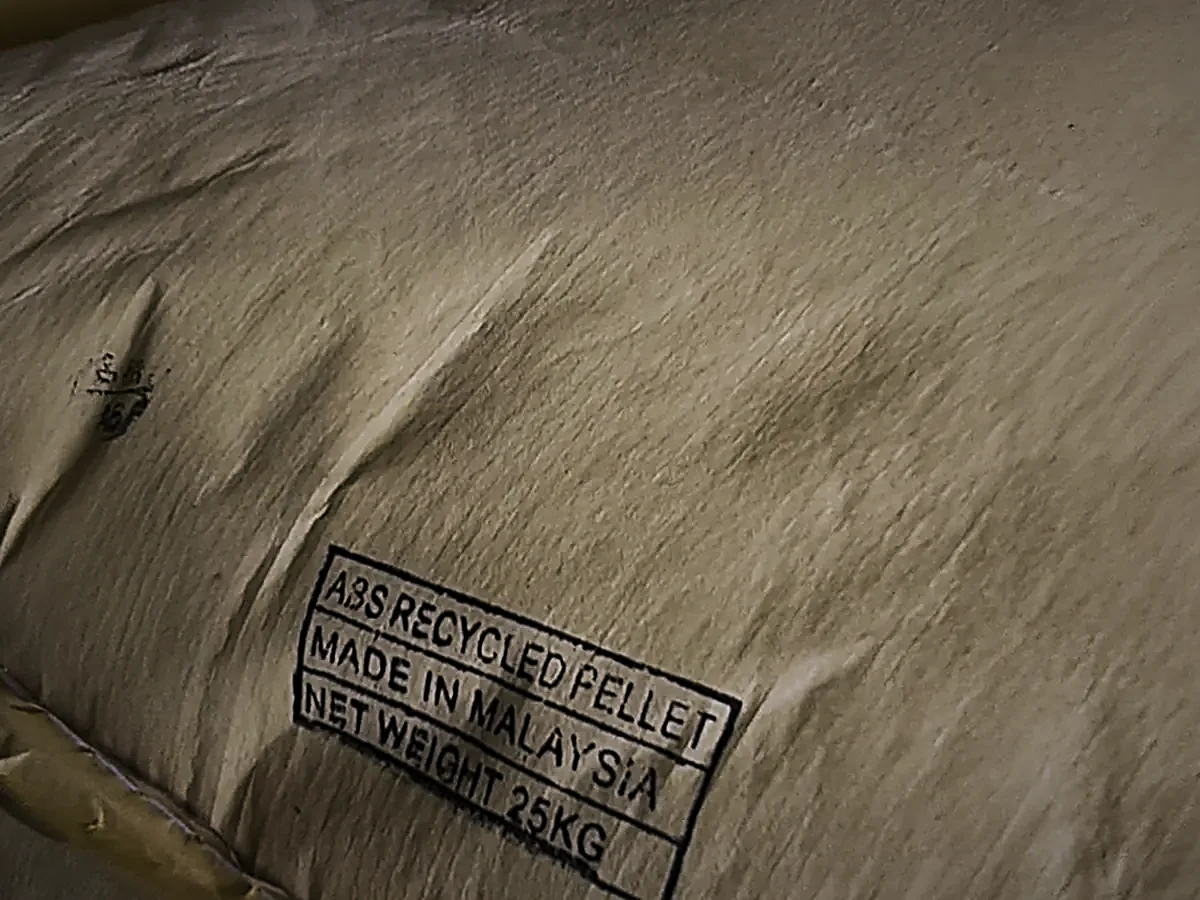 Bag print · own footage
→Printed on the bags, read line by line
- ABS RECYCLED PELLETFormRecycled pellet
- MADE IN MALAYSIAMade inMalaysia
- NET WEIGHT 25KGPacking25 kg bags
- Process
- Injection moulding
Last updated
Dayatas Profab Sdn Bhd is a recycled ABS resin supplier in Malaysia. Its ABS is recycled pellet, made in Malaysia and packed in 25 kg bags printed "ABS RECYCLED PELLET". Moulders use Dayatas Profab's resins, ABS, PS and HIPS, for injection-moulded parts such as monitor housings and motorbike covers. It sells to buyers all around the world, including China and India; its ABS datasheet and test reports are to come.
On this page7
ABS, acrylonitrile butadiene styrene, is a thermoplastic made by polymerising styrene and acrylonitrile in the presence of polybutadiene rubber. Each ingredient brings something a moulder can feel in the finished part: acrylonitrile adds chemical resistance, hardness and rigidity; the butadiene rubber adds toughness, so a housing can take a knock without cracking; styrene gives the shiny surface and makes the melt easier to process.
That balance is why ABS is described as a high-volume engineering plastic, favoured for its strength, scratch resistance and attractive finish. ABS is the resin in Dayatas Profab's 25 kg bags, sold as recycled pellet; how a given lot performs is what its datasheet will show. Beside it in the range sit PS resin, plain polystyrene, and HIPS resin, polystyrene toughened with rubber; the three are compared on ABS vs PS vs HIPS.
- Styrene unitsA shiny surface and easier processing
- Acrylonitrile unitsChemical resistance, hardness and rigidity
- Grafted polybutadiene rubberToughness, so a part takes a knock
Moulders use Dayatas Profab's resins, ABS, PS and HIPS, for monitor housings and motorbike covers. Both are injection-moulded shells that must hold their shape, take screws and clips, and come out of the tool looking finished, which is the work ABS is known for.
Those two parts sit inside a wider pattern. Injection moulding is the most common way ABS parts are made, and ABS goes into electronics housings and equipment casings, automotive interior and exterior components, and household appliances such as vacuum cleaners and coffee makers. Which resin suits which part, part by part, is set out on what moulders make with ABS, PS and HIPS.
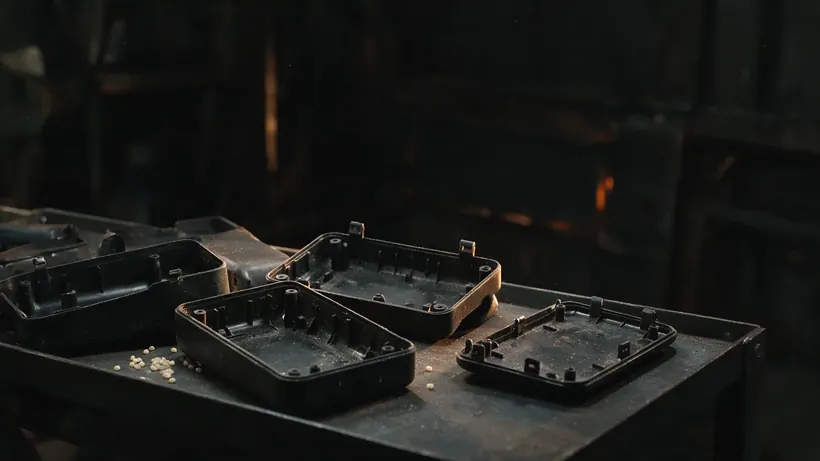
→Parts named by Dayatas Profab, and general uses of ABS
Moulders use Dayatas Profab's resins for
- Monitor housingsA shell that takes screws and clips
- Motorbike coversA curved panel on show, fitted with clips
General uses of ABS
- Electronics housings and equipment casingsSource 3
- Automotive interior and exterior partsSources 2, 3
- Household appliancesSources 2, 3
Recycled ABS is ABS reprocessed from plastic scrap rather than made from new monomer. Because ABS melts when heated and hardens again as it cools, it can be reshaped repeatedly; that is what makes it mechanically recyclable.
How a recycled lot behaves starts with its input. Plastic for recycling is ground into flakes, washed, and sorted by polymer type and colour, in an order that varies from plant to plant, and mixed or contaminated input gives inconsistent properties. In Dayatas Profab's production footage the flakes are washed before they are sorted. Dayatas Profab's ABS is recycled pellet, so a buyer judges it the way any recycled resin is judged: by the datasheet values, by a test report for the lot being bought, and by the property the part depends on, such as impact strength for a cover that takes knocks. How recycled and virgin resin compare is set out on recycled vs virgin resin.
- 01GroundScrap crushed into flakes
- 02WashedDirt and contamination washed off the flakes
- 03SortedBy polymer type and colour: mixed input gives inconsistent properties
- 04Melted and re-formedA thermoplastic can be reshaped repeatedly
Buyers in Europe and America often ask to see how the resin is produced, and Dayatas Profab's own production footage shows the steps below. The polymer in most shots is not labelled, so the footage shows the process rather than tracing one resin; the shots of finished bags printed "ABS RECYCLED PELLET" are the ABS.
What the production film shows
The log below follows the footage scene by scene, from scrap heaped in a yard to warehouse stock. Each step plays as its own clip on how Dayatas Profab's resin is made, and the 31-second film is on quality and documents.
- 01ScrapPlastic scrap heaped in a yard
- 02FlakeA loader tipping crushed flakes
- 03WashingA washing line
- 04SortingA sorting machine
- 05SortedSorted flakes running into bulk bags
- 06ExtrusionMolten strands leaving an extruder into cooling water
- 07PelletsPellets on a sieve
- 08BaggingPellets bagged from a silo
- 09StockWarehouse stock
Which scrap Dayatas Profab is looking for
Dayatas Profab is looking for suppliers of plastic scrap, home appliance products, crushed product and automotive plastic, in Europe, America, Japan and Korea. That is the scrap it wants, not a record of where a given lot of ABS came from.
One rule shapes the European side: from 21 November 2026 the EU bans exports of plastic waste to countries outside the OECD, and Malaysia is not an OECD member. The rules by region are on shipping rules for plastic scrap.
What an ABS datasheet shows
A datasheet generally lists a grade's typical values, each with the standard it was measured to. Three of them are the melt flow rate (ISO 1133-1 or ASTM D1238), which shows how easily the melt flows; the Izod impact strength (ISO 180), which shows how much energy the material absorbs before it breaks; and the density (ISO 1183-1), which sets part weight and shot size.
What Dayatas Profab has for its ABS today
Dayatas Profab's ABS datasheet, test reports and certification are to come; each will be posted on quality and documents when it is issued, and no value is quoted on this site before then. What can be checked today is the bag itself: recycled pellet, made in Malaysia, 25 kg net. The table below is general guidance on what to look for on any ABS datasheet, from any supplier.
Datasheet guide · ABS
What to look for on any ABS datasheet
| Property | Test method | What it tells you | Reported in |
|---|---|---|---|
| Melt flow rate | ISO 1133-1 · ASTM D1238 | How easily the melt flows | g / 10 min |
| Izod impact strength | ISO 180 | How much energy the material absorbs before it breaks | kJ/m² |
| Density | ISO 1183-1 | Part weight and shot size | g/cm³ |
Yes, when they are finished for it. Motorbike covers in ABS are usually painted or protected, because plain ABS degrades in sunlight and ultraviolet light: over time it discolours and turns brittle, which limits its unprotected use outdoors. Indoor parts such as monitor housings are not exposed in the same way.
So the finish belongs in the design from the start, and in the enquiry. When you ask Dayatas Profab about ABS for a part that will live outdoors, say so, together with the colour and the finish the part needs, so the reply covers the resin and the finish together.
→Three lines to add for an ABS part
- Indoor or outdoorWhere the finished part spends its life
- ColourThe colour the part needs
- FinishPainted, coated or left as moulded
SC.07
How do you order ABS resin from Dayatas Profab?
An enquiry is quickest to answer when it names the resin, the part you mould, the quantity, the destination port and the documents you need. This card is that enquiry with ABS already chosen, and its button opens the buyer's form with ABS ticked.
Prices, minimum orders and lead times are not listed on this site; ask about them in your enquiry. Before you write, the questions buyers ask most and the guides on Insights may already answer yours, and the full resin range shows Dayatas Profab's ABS beside its PS and HIPS.
→An enquiry for ABS, line by line
- 01The resin
- ABS
- 02The part you mould
- For example a monitor housing or a motorbike cover
- 03The quantity
- Per month or per shipment
- 04The destination port
- Where the resin needs to arrive
- 05Colour and finish
- Say if the part is painted, and if it lives outdoors
- 06The documents you need
- Spec sheetTest reportCertificationProduction film
SRCNumbered as they are cited in the margin of each chapter
Where do the material facts on this page come from?
- 01Wikipedia: Acrylonitrile butadiene styreneHow ABS is made and what acrylonitrile, butadiene and styrene each add
- 02INEOS: styrenicsABS favoured for strength, scratch resistance and finish; injection moulded; automotive parts, consumer electronics, household appliances. PS from styrene; two types, GPPS and HIPS; easy processability; HIPS the more durable plastic, in household appliances such as refrigerators
- 03Protolabs: ABSInjection moulding the most common process for ABS parts; housings and equipment casings, automotive interior and exterior components, appliances; ABS degrades in sunlight and UV, turning brittle and discoloured
- 04PlasticsEurope: thermoplasticsThermoplastics melt when heated, harden on cooling and can be reshaped repeatedly
- 05Wikipedia: Plastic recyclingSorting by polymer and colour, flaking and washing; mixed or contaminated input gives inconsistent properties
- 06European Commission: waste shipmentsPlastic waste exports from the EU to non-OECD countries banned from 21 November 2026
- 07OECD: members and partnersThe OECD's member countries; Malaysia is not one
- 08ISO 1133-1Melt mass-flow rate of thermoplastics, in g per 10 min
- 09ASTM D1238Melt flow rates by extrusion plastometer
- 10ISO 180:2023Izod impact strength of plastics, in kJ/m²
- 11ISO 1183-1:2025Density of non-cellular plastics
Two doors into Dayatas Profab A · buyers of resin B · suppliers of scrap