EUEnd-of-life vehicles
Regulation (EU) 2026/1738, in force since 13 August 2026: a mandatory target of 15% recycled plastic in new vehicles from 2032, scaling to 25% from 2036.
[8] European Commission
 Enquire
VSResin · Recycled or virgin ABS
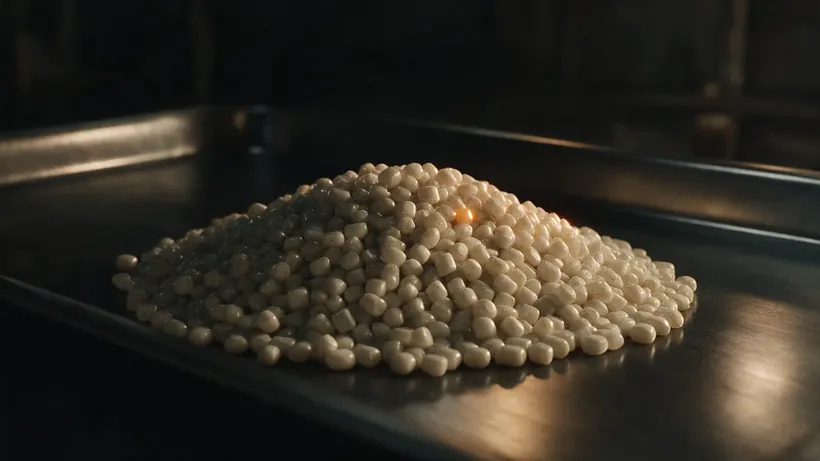
 Pellets
Recycled vs virgin ABS is a trade between recycled content and consistency. Virgin ABS is made from new feedstock, so a virgin grade is usually the more consistent from lot to lot. Recycled ABS is reprocessed from used plastic, and its properties depend on how the scrap was sorted, washed and reprocessed, so its datasheet and test report carry more weight. Dayatas Profab's ABS is recycled pellet, made in Malaysia.
Last updated 25 October 2026
SC.01
Recycled and virgin ABS are the same polymer with different histories. Virgin resin has never been made into anything; recycled resin was used, collected as scrap and reprocessed into pellets. This page compares ABS; for the other two resins, see PS resin and HIPS resin.
The choice weighs recycled content, which EU rules now write into some products, against consistency from lot to lot. Dayatas Profab supplies recycled ABS to injection moulders: see Dayatas Profab's ABS resin.
ALean to virgin ABS when
BLean to recycled ABS when
SC.02
Virgin resin is polymer made from new feedstock and sold to its maker's grade specification. Virgin resin has never been made into a product, so it carries no heat history from an earlier life and nothing picked up in use. That is why many moulders treat the virgin grade they run today as the reference for every other resin.
Virgin is a starting point, not a quality level: virgin ABS comes in many grades, set for flow, impact or appearance, each with its own datasheet. The useful comparison is one recycled grade against the virgin grade in your press, value by value, measured to the same test standards. For a moulder weighing Dayatas Profab's recycled ABS, the virgin grade already in the press is the benchmark to hold it against.
SC.03
Recycled resin starts as used plastic. ABS and polystyrene are thermoplastics: they melt when heated and harden again as they cool, which makes them mechanically recyclable [1]. PlasticsEurope describes mechanical recycling as the most common approach; chemical recycling instead changes the polymer's chemical structure [2].
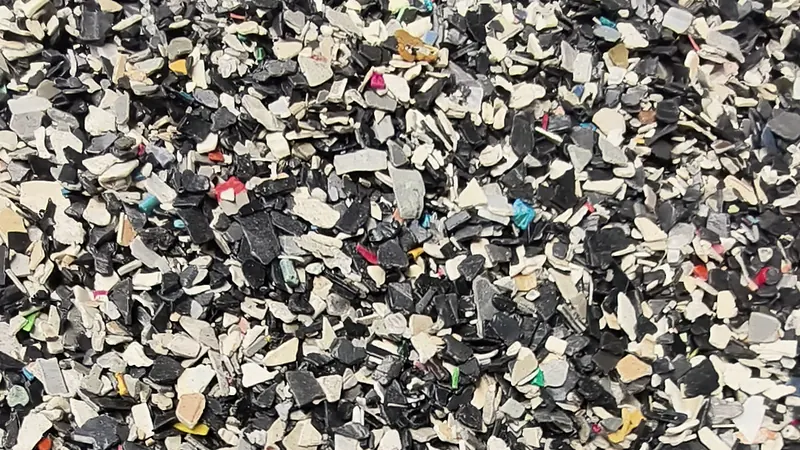
In mechanical recycling, plastic is sorted by polymer type and colour, ground into flakes and washed [3], then melted, extruded and cut into pellets. A stray polymer missed at sorting, or dirt left on the flake, stays in the resin.
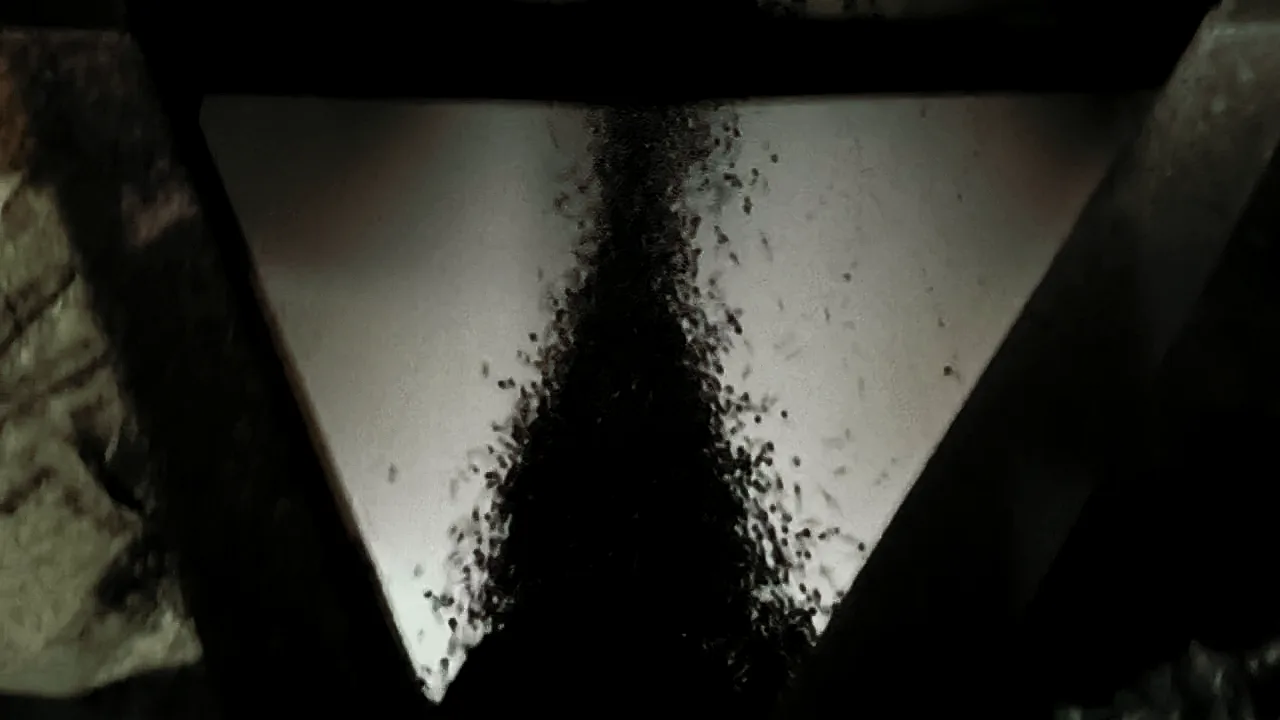
Dayatas Profab's own footage shows plastic scrap heaped in a yard, a washing line, a sorting machine, molten strands leaving an extruder into cooling water and pellets bagged from a silo. The film is on how Dayatas Profab's resin is made, from scrap to pellet.
SC.04
Recycled ABS is still ABS. The differences come from what happened to the material before it reached the bag, and three show up most often.
Heat history
ANone: never melted into a product
BMelted again: in a 2023 study, ABS from electronics scrap kept its thermal and tensile properties over six reprocessing cycles; its impact strength dipped about 7% at the second and was back at its starting value by the fifth [4].
Mixed or dirty input
AOne controlled feedstock
BMixed polymers or contamination give a resin whose properties are inconsistent [3].
Colour
AThe maker's colour range for the grade
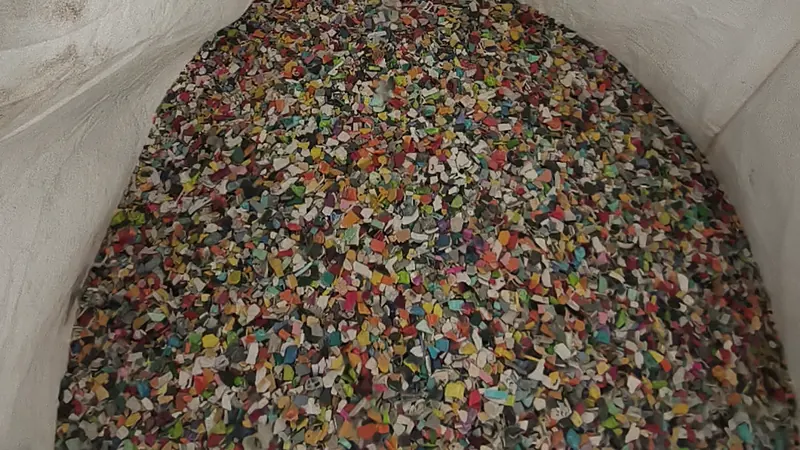
BFollows the colours the scrap was sorted into; colour sorting is common practice [4].
A 2026 study of recycled ABS for 3D printing from granules, not injection moulding, concluded that its high-performance uses need blending with virgin material or targeted additives [5]. None of this rules out recycled ABS, Dayatas Profab's included: its datasheet, the lot's test report and a trial in your own tool carry the weight.
SC.05
The table is qualitative on purpose: a number belongs to one grade measured to one standard, never to "recycled" or "virgin" in general. Read the right-hand column as questions to put to any recycled-resin supplier, Dayatas Profab included.
| AVirgin resin | Point | BRecycled resin |
|---|---|---|
| New feedstock | Made from | Used plastic, collected as scrap and reprocessed |
| None | Earlier life | Melted at least once; impact strength can drop on reprocessing [4] |
| A grade is usually the more consistent | Lot to lot | Depends on how the scrap was sorted, washed and reprocessed |
| The maker's range for the grade | Colour | The colours the scrap was sorted into |
| None | Recycled content | Part or all of the resin; blending with virgin sets the share |
| The virgin market price | Price | Typically below virgin, but no longer in every market [6] |
| The maker's datasheet | Documents to ask for | The datasheet, a test report on your lot, where the scrap came from |
SC.06
Recycled content has moved from a welcome extra to a written requirement in some markets, most clearly the European Union.
Rules checked 25 October 2026
EUEnd-of-life vehicles
Regulation (EU) 2026/1738, in force since 13 August 2026: a mandatory target of 15% recycled plastic in new vehicles from 2032, scaling to 25% from 2036.
[8] European Commission
EUCircular Plastics Alliance
A pledge of 10 million tonnes of recycled plastics used in new products by 2025, which the Commission reports was delivered.
[9] European Commission
EUWaste shipments
Exports of plastic waste from the EU to non-OECD countries, Malaysia among them, are banned from 21 November 2026.
Among Dayatas Profab's markets, buyers in Europe and America ask a lot for resin specs, certification, test reports and video of the production. The rules reach the supply side too: the waste-shipment ban above covers plastic waste exported from the EU to Malaysia. For suppliers of automotive plastic scrap and other scrap, see selling plastic scrap to Dayatas Profab.
SC.07
A recycled grade is judged like any resin: documents first, then the tool. Ask any recycled-resin supplier, Dayatas Profab included, for four things.
ISO 1133 [14]ISO 180 / ISO 179 [15, 16]ISO 1183 [17]ISO 527 [18]
Named lab, lot, standard
Production film
Your tool
ISO 15270 sets out the quality requirements for every step of recovering and recycling plastics [13]. What each document should show is on quality and documents: specs, test reports, certification and production film.
SC.08
Dayatas Profab supplies ABS, PS and HIPS resin for injection moulding. Dayatas Profab's ABS is recycled pellet, made in Malaysia and packed in 25 kg bags printed "ABS RECYCLED PELLET / MADE IN MALAYSIA / NET WEIGHT 25KG".
Still to come: the spec sheets, test reports and certification, so this page quotes no figure for Dayatas Profab's resin. For PS and HIPS, ask us for the current grade, its form and packing. The resins are on Dayatas Profab's ABS resin and ABS, PS and HIPS resin for injection moulding; how the three polymers differ is on ABS vs PS vs HIPS, common questions are in the FAQ, and more buyer guides are on Insights.
REF
Last updated 25 October 2026
Two doors into Dayatas Profab A · buyers of resin B · suppliers of scrap