
03Resin 03 of 03 · High impact polystyrene
HIPS resin, polystyrene toughened to take a knock.
→HIPS at a glance
- Process
- Injection moulding
- Company's buyers
- All around the world
- Range
- Sold with ABS and PS
Last updated
Dayatas Profab Sdn Bhd sells HIPS resin for injection moulding, alongside ABS and PS, and the company's buyers are all around the world, including China and India. HIPS, high impact polystyrene, is polystyrene toughened with a dispersed rubber phase, so it takes knocks that would crack general-purpose PS; household appliances such as refrigerators are a common use. Its HIPS datasheet and test reports are to come.
On this page6
HIPS is high impact polystyrene, one of the two basic types of polystyrene. It is made by polymerising styrene with polybutadiene rubber dissolved in it, which leaves a continuous polystyrene matrix with a rubber phase dispersed through it; growing polystyrene chains graft onto the rubber as they form. General-purpose polystyrene on its own is hard and brittle, and the rubber particles improve impact strength, so HIPS takes knocks that would crack it.
The drawing at the top of this page shows that structure, and the key below reads it. Dayatas Profab sells HIPS resin for injection moulding as the toughened member of a styrenic range that also includes PS resin and ABS resin.
→Reading the drawing at the top of the page
- Polystyrene matrixThe same glassy base as general-purpose PS: hard and brittle on its own
- Polybutadiene rubber particlesDispersed through the matrix; they improve impact strength
- Grafted chainsPolystyrene chains bonded to the rubber as they form
Housings for electronics and appliances are often specified to a flammability rating, and the common one for plastics is UL 94. Its vertical ratings, V-2, V-1 and V-0, show whether a specimen held upright stops burning within a set time after the flame is removed, and whether it drips flaming particles; HB is the horizontal test. V-0 is the most demanding of the four.
A flame rating belongs to a specific grade, not to HIPS in general. Dayatas Profab has not stated a UL 94 rating for its HIPS, so ask for the rating of the grade you are offered. For a recycled lot made from old electronics, ask too whether it has been tested for restricted flame retardants: in the EU, the RoHS Directive restricts polybrominated biphenyls and polybrominated diphenyl ethers in electrical and electronic equipment.
Rules checked
| Rating | Specimen | What it requires |
|---|---|---|
| HB | Horizontal | Burns slowly: the flame may spread no faster than a set rate for the specimen's thickness |
| V-2 | Vertical | Burning stops within 30 seconds after the flame is removed; flaming drips are allowed |
| V-1 | Vertical | Burning stops within 30 seconds; no flaming drips |
| V-0 | Vertical | Burning stops within 10 seconds; no flaming drips |
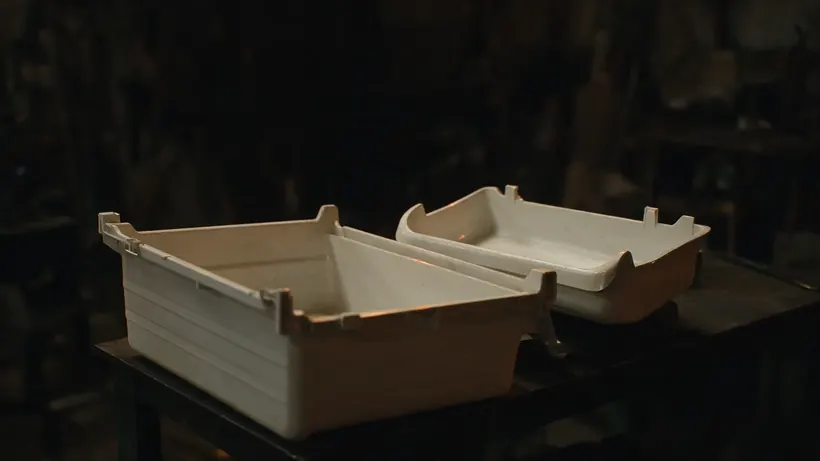
HIPS goes into household appliances, and refrigerators are a common example. Parts inside a refrigerator are handled every day and knocked by shelves, bottles and boxes; they must hold their shape, while a glossy, scratch-resistant face matters less than it does on the outside of the appliance. HIPS is also used for electronic devices.
Beyond appliances, HIPS suits trays, covers and housings that need more toughness than general-purpose PS can give but not the full set of properties ABS brings. Dayatas Profab's HIPS is sold for injection moulding; which resin goes into which part is on what moulders make with ABS, PS and HIPS. Appliances come back at the end of their life as scrap, which is where home appliance plastic scrap picks up.
→Parts moulded in HIPS
General uses of HIPS
- Refrigerator and appliance partsSources 1, 2
- Trays and covers that are knockedWhere general-purpose PS is too brittle · source 3
- Housings that need toughness more than finishWhere ABS is more than the part needs
HIPS and ABS both carry a rubber phase for toughness, and both go into household appliances. The difference is what else the resin brings: ABS adds acrylonitrile, for hardness, rigidity and chemical resistance, and it is favoured for strength, scratch resistance and an attractive finish.
HIPS is usually enough when a part must take knocks but is not on show, does not meet chemicals and does not need to resist scratches, as with many appliance interiors. Step up to ABS resin for a visible housing or cover that must stay glossy and unmarked; step down to PS resin only for rigid parts that do not need to take impact. Dayatas Profab sells all three, and the full comparison is on ABS vs PS vs HIPS.
- PSPolystyreneThe base: one monomer, styrene. Hard, rigid and easy to process, but brittle.PS resin
- HIPSHigh impact polystyreneA dispersed rubber phase added to polystyrene, which improves impact strength.This page
- ABSAcrylonitrile butadiene styreneAcrylonitrile and butadiene rubber added: hardness, rigidity, chemical resistance and toughness.ABS resin
What a HIPS datasheet should show
For HIPS, ask for the melt flow rate (ISO 1133-1 or ASTM D1238); the Izod impact strength (ISO 180), the number that shows what the rubber phase is doing; and the density (ISO 1183-1). For a housing, add the UL 94 rating of the grade.
Dayatas Profab's HIPS datasheet, test reports and certification are to come; each will be posted on quality and documents when it is issued. Its form, packing, colour and whether it is recycled or virgin are being confirmed; recycled vs virgin resin explains why the last point matters. The table below is general guidance on what to look for on any HIPS datasheet, from any supplier.
Datasheet guide · HIPS
What to look for on any HIPS datasheet
| Property | Test method | What it tells you | Reported in |
|---|---|---|---|
| Melt flow rate | ISO 1133-1 · ASTM D1238 | How easily the melt flows | g / 10 min |
| Izod impact strength | ISO 180 | How much energy the material absorbs before it breaks | kJ/m² |
| Density | ISO 1183-1 | Part weight and shot size | g/cm³ |
The production film
Buyers in Europe and America often ask for video of the production as well as specs, test reports and certification. Dayatas Profab's production film shows steps from scrap to bagged pellet; two frames of it are below. The polymer in these shots is not labelled, so they show the process, not this resin. Every step the film shows is on how Dayatas Profab's resin is made.
Two frames from the production film · polymer not labelled
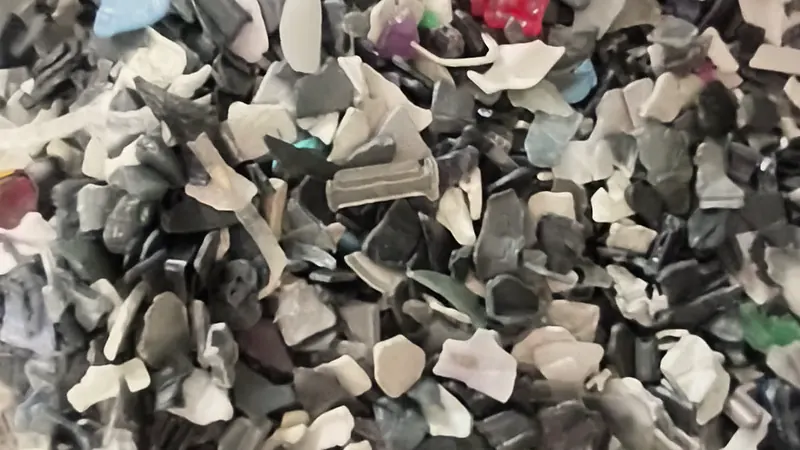
01Crushed flake 
02In the bag
SC.06
How do you order HIPS resin from Dayatas Profab?
The quickest enquiry names the part you mould, the quantity, the destination port and the documents you need. For HIPS, add the UL 94 rating the part needs, if any, because a rating belongs to a specific grade. The button on this card opens the buyer's form with HIPS ticked.
Prices, minimum orders and lead times are not listed on this site; ask about them in your enquiry. Dayatas Profab is also looking for suppliers of plastic scrap in Europe, America, Japan and Korea; what the rules allow from each region is on shipping rules for plastic scrap. The questions buyers ask most, the guides on Insights and the full resin range may already answer yours.
→An enquiry for HIPS, line by line
- 01The resin
- HIPS
- 02The part you mould
- For example an appliance tray, a cover or a housing
- 03The quantity
- Per month or per shipment
- 04The destination port
- Where the resin needs to arrive
- 05Flame rating
- The UL 94 rating the part needs, if any
- 06The documents you need
- Spec sheetTest reportCertificationProduction film
SRCNumbered as they are cited in the margin of each chapter
Where do the material facts on this page come from?
- 01INEOS: styrenicsABS favoured for strength, scratch resistance and finish; injection moulded; automotive parts, consumer electronics, household appliances. PS from styrene; two types, GPPS and HIPS; easy processability; HIPS the more durable plastic, in household appliances such as refrigerators
- 02INEOS Styrolution: polystyrene line-up (13 Sep 2022)GPPS transparent, for injection moulding or extrusion; HIPS impact modified, for electronic devices
- 03Wikipedia: PolystyrenePolystyrene hard and brittle; HIPS a polystyrene matrix with a dispersed rubber phase, polystyrene chains grafted to the polybutadiene
- 04UL Solutions: combustion (fire) tests for plasticsUL 94: HB tested horizontally; V-2, V-1 and V-0 vertically, by burning time after the flame is removed (30 s, 30 s, 10 s) and flaming drips
- 05European Commission: RoHS DirectiveDirective 2011/65/EU restricts substances in electrical and electronic equipment, among them polybrominated biphenyls (PBB) and polybrominated diphenyl ethers (PBDE)
- 06Wikipedia: Acrylonitrile butadiene styreneHow ABS is made and what acrylonitrile, butadiene and styrene each add
- 07ISO 1133-1Melt mass-flow rate of thermoplastics, in g per 10 min
- 08ASTM D1238Melt flow rates by extrusion plastometer
- 09ISO 180:2023Izod impact strength of plastics, in kJ/m²
- 10ISO 1183-1:2025Density of non-cellular plastics
Two doors into Dayatas Profab A · buyers of resin B · suppliers of scrap