
GuideDayatas Profab · Insights
What test reports do buyers in Europe and the US ask for with recycled resin?
Buyers of recycled ABS, PS or HIPS usually ask for a physical property report (melt flow rate, density and impact strength, each with its test method), a chemical screen against the EU RoHS directive when the part goes into electrical or electronic equipment, what is known about brominated flame retardants, and a flame rating such as UL 94 only where the part needs one.
On this page10
Dayatas Profab, a Malaysian company, makes recycled ABS, PS and HIPS resin for injection moulders. Buyers in Europe and America ask a lot for resin specs, certification, test reports and video of the process. This guide sets out which test reports those buyers usually ask for, what each one shows and what it does not, and which ones we have today. What a datasheet should show is a separate question, covered in what a recycled resin datasheet should show.
✓Key takeaways
- Physical properties first. Melt flow rate, density and impact strength, each with the ISO method and conditions (sources 2, 3, 4).
- RoHS for electrical parts. The EU directive restricts ten substances in electrical and electronic equipment (source 1).
- A screen is not a certificate. Dayatas Profab's screens found total bromine of 132 ppm in its ABS and 439 ppm in its PS, against a 1,000 ppm limit for PBB and PBDE.
- Flame rating only where the part needs it. UL 94's common ratings include HB, V-2, V-1 and V-0 (source 6); Dayatas Profab holds no UL 94 rating.
Which test reports do buyers ask for with recycled resin?
The two reports buyers of recycled ABS, PS or HIPS for injection moulding most often need are a physical property report, so they can set up the moulding machine and judge the part, and a chemical screen, so they know the resin can go into the product and the market they sell to. A flame rating and food-contact evidence come up only for some parts.
| Report | What it shows | Usually asked for | Dayatas Profab today |
|---|---|---|---|
| Physical properties | Melt flow rate, density, impact strength | Most orders | ABS and PS reports |
| RoHS screen | Lead, cadmium, mercury, chromium and total bromine at the surface | Parts for electrical and electronic equipment | ABS and PS screens |
| Flame rating (UL 94) | How a test bar burns and drips | Parts that must resist burning, such as some housings | No rating held |
| Food-contact evidence | That recycling removes contaminants | Food packaging only | No food-contact claim |
What does a physical property report for recycled ABS or PS show?
A physical property report gives the melt flow rate, the density and the impact strength of a resin sample, each measured by a named test method. A buyer uses the melt flow rate to judge how the resin will fill a mould, the density to check the material, and the impact strength to judge how tough the part will be.
Each value only means something with its method. Melt flow rate is measured to ISO 1133, whose current part 1 is ISO 1133-1:2022, the method for the melt mass-flow rate (MFR) and melt volume-flow rate (MVR) of thermoplastics (source 2); density to ISO 1183; and Izod impact strength to ISO 180. ISO's pages show the 2019 editions of ISO 1183-1 and ISO 180 as withdrawn and revised by ISO 1183-1:2025 and ISO 180:2023 (sources 3, 4). Dayatas Profab's reports name each standard without an edition.
| Property and method | ABS | PS |
|---|---|---|
| Melt flow rate (ISO 1133) | 20.3 g/10 min | 6.7 g/10 min |
| Density (ISO 1183) | 1.055 g/cm³ | 1.04 g/cm³ |
| Notched Izod impact (ISO 180/1A, 23 °C) | 12.74 kJ/m² | 8.7 kJ/m² |
Dayatas Profab's reports do not state the temperature and load used for the melt flow rate, so ask us for them before comparing our figure with another supplier's. HIPS is the high-impact grade of our PS; there is no separate HIPS report. The resins themselves are on recycled ABS resin and recycled PS resin.
What does a RoHS test report for recycled plastic show, and what does it not?
A RoHS screen checks a resin sample for restricted metals and for total bromine, a marker for brominated flame retardants, against the limits for electrical and electronic equipment sold in the EU. It is a quick X-ray fluorescence test of the sample's surface: a first check, not a full chemical analysis and not a certificate.
The directive covers every electrical product unless excluded. The European Commission's RoHS page says the directive “restricts the use of ten substances”: lead, cadmium, mercury, hexavalent chromium, PBB, PBDE and four phthalates (DEHP, BBP, DBP and DIBP), and that “All products with an electrical and electronic component, unless specifically excluded, have to comply with these restrictions.” (source 1).
Our own screens, from Yue Ce Testing Center in Dongguan on 28 September 2026, found cadmium, lead, mercury and chromium not detected (5 ppm or less) in both our ABS and our PS, and total bromine of 132 ppm in the ABS and 439 ppm in the PS, which the laboratory compared with the 1,000 ppm limits for PBB and PBDE. The screens report those elements only. More on our documents is on quality and documents.
Why do buyers ask about brominated flame retardants?
Because recycled ABS, PS and HIPS can come from old TV, monitor and appliance housings, and many of those carried brominated flame retardants. The Oeko-Institut's 2014 report on WEEE plastics, on TV and monitor housing samples, says: “Around 70% of the plastics were added with BFR.” (source 9). Some of those substances are now restricted, so a buyer wants to know what the scrap was and what a screen found.
The Stockholm Convention lists commercial decaBDE in its Annex A, and its page on alternatives notes that “up to 90% of c-decaBDE ends up in plastic and electronics” (source 7). In Europe, the European Commission says REACH “places responsibility on industry to manage the risks from chemicals and to provide safety information on the substances” (source 8). Which appliance plastics carry flame retardants is covered in which plastics in scrapped appliances are ABS, HIPS or PS.
Do buyers ask for a UL 94 flame rating?
Only when the moulded part must resist burning, such as some electrical housings. UL 94 classes a plastic by how a test specimen burns. Its common ratings are HB for slow burning on a horizontal bar, then V-2, V-1 and V-0 for bars held vertically, where V-0 stops burning soonest; the stricter 5VB and 5VA surface-burn ratings also exist.
The UL 94 summary on Wikipedia describes V-0 as “burning stops within 10 seconds on a vertical specimen; drips of particles allowed as long as they are not inflamed”, and V-2 as “burning stops within 30 seconds on a vertical specimen; drips of flaming particles are allowed” (source 6). Dayatas Profab's test reports do not include UL 94, and it holds no UL 94 rating. What monitor housings need is on quality and documents.
What about food contact?
Recycled ABS, PS or HIPS for food packaging needs its own evidence, separate from the reports for injection-moulded parts. In the US, a manufacturer that wants the Food and Drug Administration to consider recycled plastic for food contact submits a description of the recycling process and test results showing it removes possible contaminants.
The FDA's page on recycled plastics in food packaging says that a manufacturer that wants the FDA to consider recycled plastic for a food-contact application should submit “A complete description of the recycling process” and “The results of any tests performed to show that the recycling process removes possible incidental contaminants” (source 5). Dayatas Profab makes no food-contact claim for its resin.
What should you check on any test report?
Check who tested the sample and when, what the sample was, which method and conditions were used, and what the report says its figures may be used for. A report describes the sample tested, not every bag of a later order.
- The laboratory and the date.Dayatas Profab's: Yue Ce Testing Center, Dongguan, 28 September 2026.
- The sample.Dayatas Profab's were black pellets, with no lot number on the reports.
- The method and conditions.The ISO method for each value, and for melt flow rate the temperature and load.
- What the figures are for.Ours say they are for reference and comparison.
- What is missing.A blank row is information too: our reports carry no UL 94, heat deflection or Vicat values.
Common questions about test reports for recycled resin
Is a RoHS screen the same as a RoHS certificate?
No. A screen is a quick X-ray fluorescence test of a sample's surface for restricted metals and total bromine. It shows whether anything restricted turns up in that sample; it is not a full chemical analysis and not a certificate for every later lot.
Which melt flow rate should a recycled ABS have?
It depends on the part and the mould, so buyers compare a resin's melt flow rate with the grade they use now. Compare only figures measured to the same method, ISO 1133, at the same temperature and load; Dayatas Profab's ABS report gives 20.3 g/10 min without stating them.
Does Dayatas Profab have a test report for HIPS?
No separate one. HIPS is the high-impact grade of Dayatas Profab's PS, so the PS reports of 28 September 2026 are the ones it has. These are PS figures, not HIPS figures: melt flow rate 6.7 g/10 min, density 1.04 g/cm³ and notched Izod impact 8.7 kJ/m².
Can recycled resin be used for food packaging?
Only with food-contact evidence for the recycling process. In the US, a manufacturer that wants the FDA to consider recycled plastic for food contact submits a description of the process and test results showing it removes possible contaminants. Dayatas Profab makes no food-contact claim for its resin.
How do you ask Dayatas Profab for test reports?
Ask through the buyer door of our enquiry form and say which resin you need, ABS, PS or HIPS, what the part is and where it will be sold. We will tell you which of our reports fit and what they do not cover.
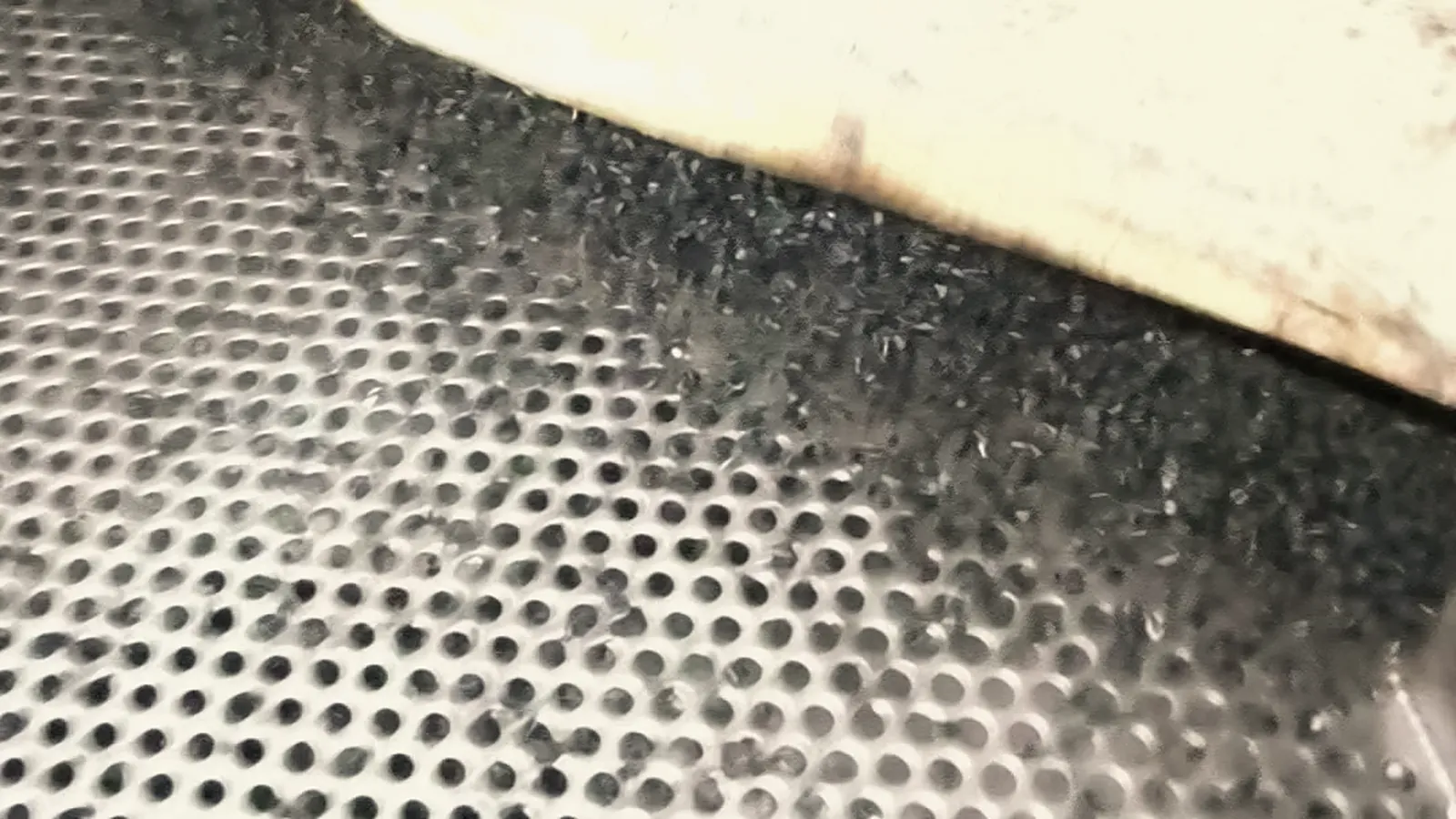
The picture at the top of this page is a frame of our own production footage: black pellets on the sieve after the cutter. Every step is on how our resin is made.
Sources
How this guide was prepared: we read the pages listed below on 4 November 2026. Our own figures come from our laboratory reports of 28 September 2026.
- European Commission, “Restriction of Hazardous Substances in Electrical and Electronic Equipment (RoHS)”: the ten restricted substances and the scope.
- ISO 1133-1:2022, Plastics: determination of the melt mass-flow rate (MFR) and melt volume-flow rate (MVR) of thermoplastics, Part 1: standard method (edition 2).
- ISO 1183-1:2019, Plastics: methods for determining the density of non-cellular plastics, Part 1 (edition 3, withdrawn; revised by ISO 1183-1:2025).
- ISO 180:2019, Plastics: determination of Izod impact strength (edition 4, withdrawn; revised by ISO 180:2023).
- US Food and Drug Administration, “Recycled Plastics in Food Packaging”: what a manufacturer submits for food-contact use.
- Wikipedia, “UL 94”: the HB, V-2, V-1, V-0, 5VB and 5VA classes.
- Stockholm Convention, decaBDE alternatives page: c-decaBDE in plastic and electronics.
- European Commission, “REACH Regulation”: industry's responsibility for chemical safety information.
- Oeko-Institut (Daniel Bleher), “Recycling options for WEEE plastic components”, October 2014: brominated flame retardants in TV and monitor housing samples.
Two doors into Dayatas Profab A · buyers of resin B · suppliers of scrap